

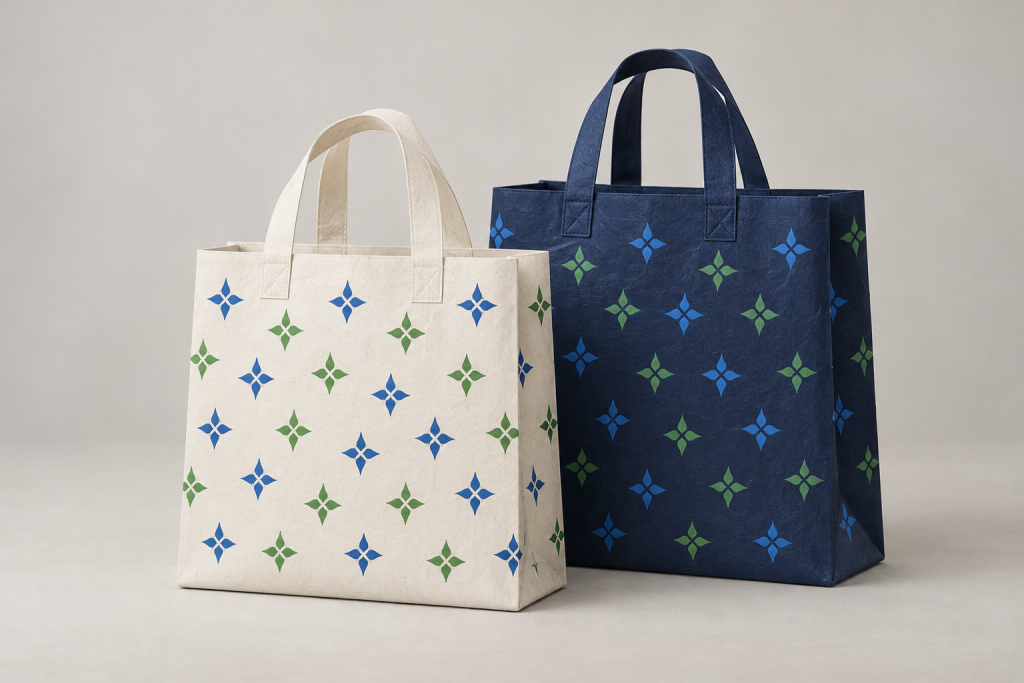
01 / OPTION
Carrying or shipping
We start by establishing whether the bag is for retail, product packaging or shipping.
Discuss your requirements ↗Plastrum / Paptic® bags
For a Paptic® bag, we start with its use: do you need a carrier bag, product pack or e-commerce mailer? This determines the material grade, construction and printing.
Dimensions, material and printing tailored to your project.
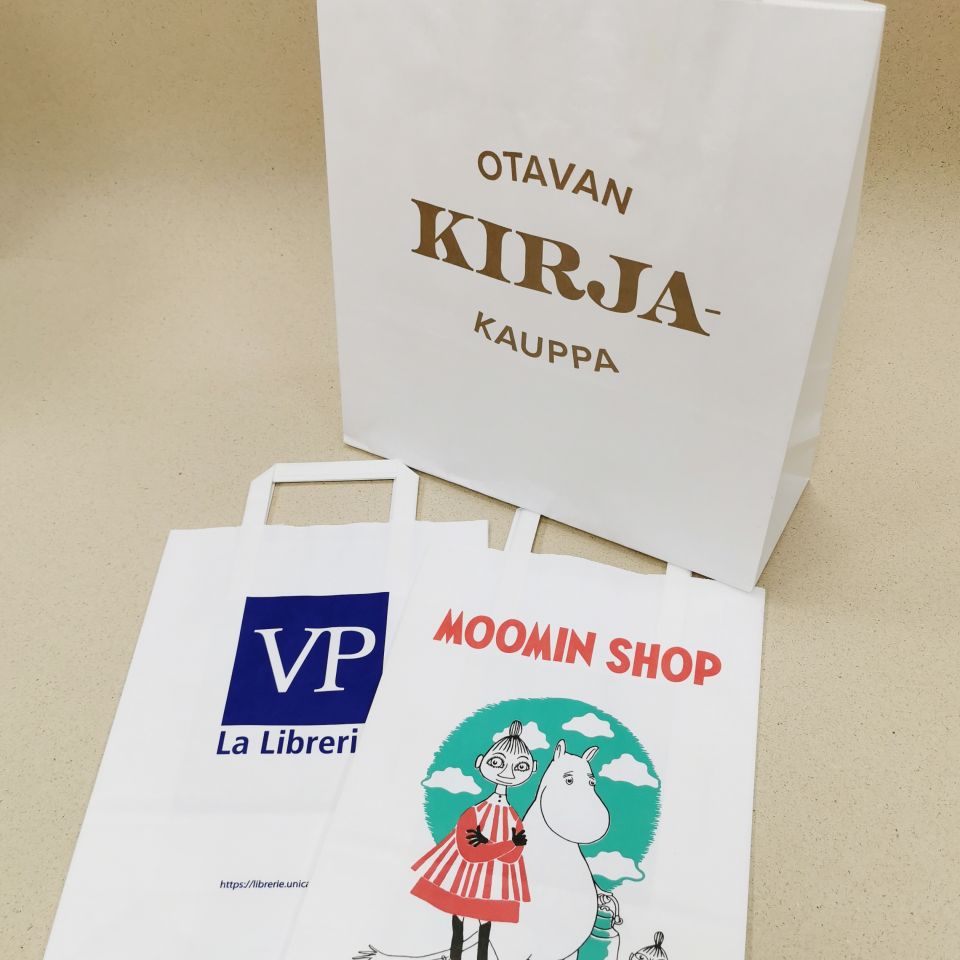
Product example. The exact solution and design are agreed with you to suit your project.
01 / Your options
We combine use, material and design into a suitable solution.
We start by establishing whether the bag is for retail, product packaging or shipping.
Discuss your requirements ↗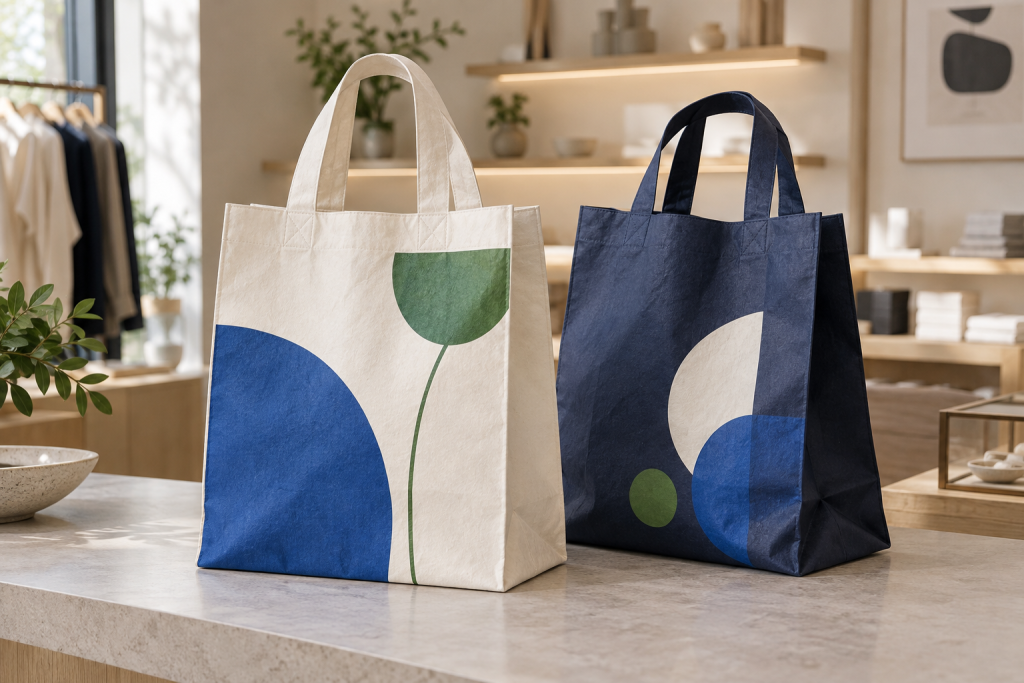
Material grade and bag construction are selected for the specific application.
Discuss your requirements ↗We match printing technology to your artwork and planned quantity.
Discuss your requirements ↗02 / A considered solution
Describe the use and contents, and include dimensions, quantity and artwork.
Discuss your requirements ↗03 / Easy to order
Describe the use, quantity and deadline. Add a sample, drawing or artwork.
We select suitable production options and prepare a quotation.
We agree the specification, any sample, printing and delivery schedule.
We liaise with the manufacturer and arrange delivery to the agreed destination.
04 / Good to know
We clarify the important details before production starts.
It is more resistant to moisture and load, has a softer textile-like surface and does not tear as easily as ordinary paper.
Yes. Paptic® mailers are designed for shipping: they are strong, flexible and reduce overpacking.
Yes. Logos, full-surface artwork and repeat patterns are available.
The minimum depends on dimensions, material, printing and production method. Include your required quantity; the exact minimum is confirmed in the quotation.
Include your required arrival date. Production and delivery timing are confirmed after the specification and artwork are agreed.
A technical overview of Paptic® bags: materials, printing options and lead times.
Every project starts with a short consultation to find the Paptic® solution and printing format that best suit your concept.
Paptic® is a wood-fibre-based packaging material classified by its manufacturer as paper. Its properties differ from conventional kraft paper, and the grade is selected for the application. Why choose a third material when paper and plastic already meet most needs? Paptic® fills the gap where ordinary paper tears too easily and plastic film does not fit the brand’s environmental positioning.
Paptic® combines the natural feel of paper, the durability of plastic film and the flexibility of textiles. Compared with ordinary paper, it resists tearing under moisture and load. Compared with plastic film, it has a soft, textile-like surface that suits sustainability-focused brands. It is lightweight, quiet and pleasant to touch, enhancing the customer experience in-store and through e-commerce deliveries.
Paptic® carrier bags suit brands seeking a high-quality shopping experience. The soft, textile-like surface creates a premium feel, and the bag withstands reuse better than an ordinary paper bag.
Paptic® e-commerce mailers are strong, flexible shipping bags that can replace cardboard packaging for suitable products. The material follows the product’s shape, reduces overpacking and provides a refined unboxing experience.
Paptic® product packaging suits clothing and smaller products. The material can run on existing packing lines, while its smooth surface provides a smart appearance throughout the logistics chain.
Paptic Tringa® is a soft, textile-like material for carrier bags and other packaging. The manufacturer’s current range includes 80 g/m², with 110 and 140 g/m² options depending on production minimums. Paptic Sterna® suits carrier bags and e-commerce mailers; the current product range lists 85 g/m². Availability of the previously offered 100 g/m² option must be confirmed separately. Bag load capacity also depends on dimensions, handles and joints. Paptic® Apus, Gavia and Perdix are application-specific options for product packaging and protective materials, selected for the product’s requirements.
Paptic® bags can carry custom printing, from logos to full-surface artwork and repeat patterns, making each bag visible branded packaging in-store and after purchase. As the material retains its quality through repeated use, the print stays clear and professional for longer than on ordinary paper bags.
Retail and clothing stores use Paptic® carrier bags where packaging must be both durable and attractive.
Gift shops choose it to stand out from conventional paper or plastic packaging.
E-commerce uses Paptic® mailers to reduce overpacking and improve the unboxing experience.
Events and campaigns use Paptic® when the packaging itself should communicate a sustainability message.
Standard models start at 1,000–5,000 pieces. Digital printing suits smaller quantities and flexographic printing larger orders. Custom dimensions are project-specific; premium finishes are by agreement.
Plastrum selects the best combination of Paptic® material and printing for each project to meet the brand’s visual and sustainability requirements. Our broad manufacturer network provides flexibility and dependable supply. We serve businesses throughout the Baltics and Scandinavia.
It is more resistant to moisture and load, has a softer textile-like surface and does not tear as easily as ordinary paper.
Yes. Paptic® mailers are designed for shipping: they are strong, flexible and reduce overpacking.
Yes. Logos, full-surface artwork and repeat patterns are available.
The material is selected together with the dimensions, handles and joint construction. Tringa and Sterna suitability cannot be decided from grammage alone; load capacity must be confirmed for the specific bag.
05 / Tell us about your project
Describe the use and contents, and include dimensions, quantity and artwork. You do not need to have every detail decided yet.
Plastrum selects a suitable manufacturer and coordinates the order and delivery.
Paptic® bags
Describe your requirements in the message. Attach artwork, a photo or a specification.
"*" indicates required fields
"*" indicates required fields